Earth
The third planet is Earth. Have you ever heard of it? It is the planet we all live on, and the only place in the universe that contains life for sure. Unlike all the other planets, our home planet isn’t named after a Roman god. Instead, the word “Earth” just means dirt, and all the dirt beneath us is part of our planet. The Earth is a very interesting place, and although we have lived here all our lives, there is still much to learn.
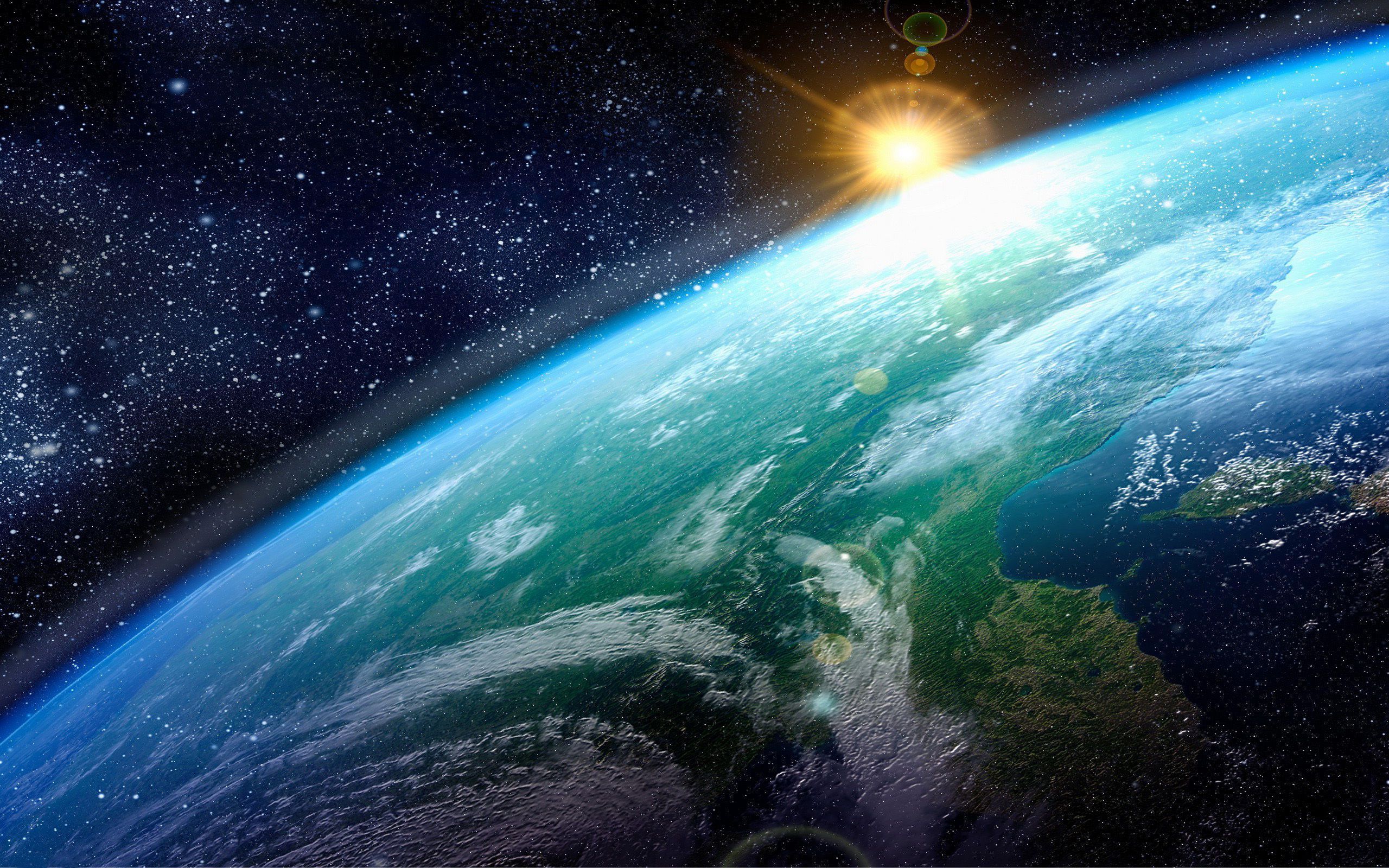
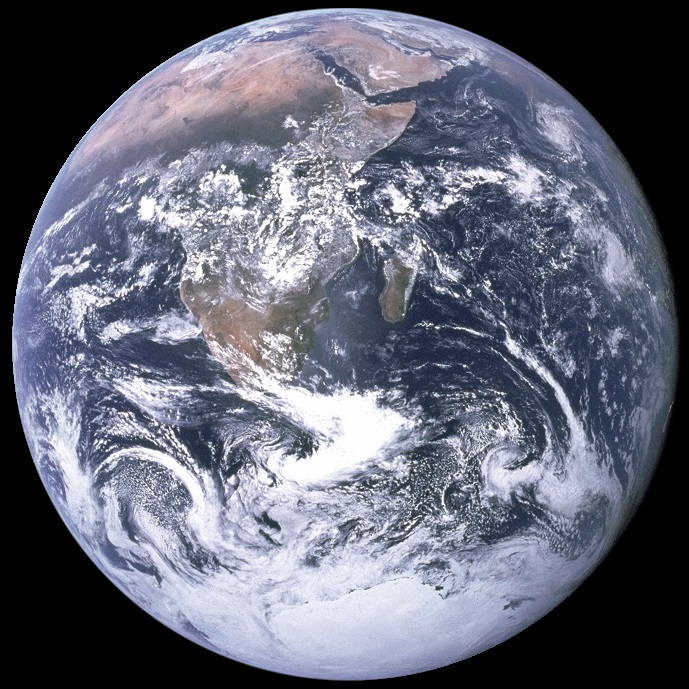
The Earth is the third planet from the sun. it orbits at 150 million km from the sun on average. This distance is also called 1 astronomical unit, or AU. It is useful for measuring big distances in the solar system. Light from the sun takes about 8 minutes to travel this distance and get to Earth.
You probably already know that 1 day passes every 24 hours, and each orbit is about 365.25 days. Because we celebrate a new year every 365 days, the extra .25 days adds up. Every 4 years, we have an extra day to account for this, called a leap year. However, did you know that the rotation of the Earth slowing down? In a few hundred million years, each day will be 25 hours long!
Earth orbits the sun on a slightly tilted axis. Because of this, each hemisphere receives more sunlight than the other for half the year. This is what causes the seasons. The half receiving more light becomes hotter, causing summer. On the other half, it is winter.
Earth is the largest of the 4 rocky planets, the planets that are mostly made of rock rather than gas. It has a radius of 6400 km. because of its large size and composition, Earth is the densest planet in the solar system
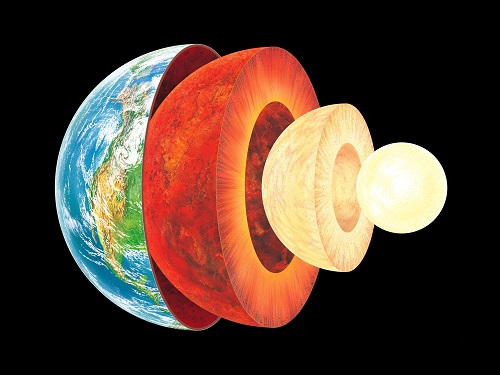
At the center of the Earth is the inner core. It has a radius of about 1200 km. even though the temperatures can be over 5500 C, the inner core is solid because of the high pressure. The surrounding 2300 km thick layer is the outer core. The inner and outer core are made of metal, mostly iron and nickel. The outer core is a liquid. The liquid metal in the outer core moves around and creates Earth’s magnetic field.
Outside the core is the mantle, a layer of molten rock and silicon materials 2900 km thick. Because of the high temperature and pressure, the mantle is neither solid or liquid, but a highly viscous fluid. The rock is very plastic, and over millions of years, it flows in currents through the mantle. This carries the crust on top with it and is what causes plate tectonics.
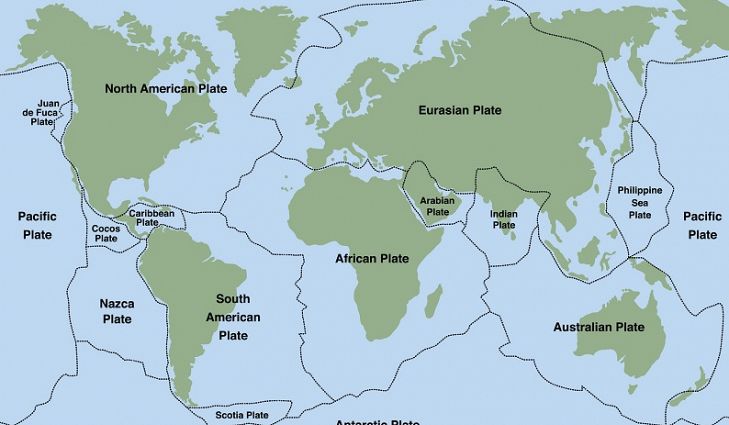
On the surface is the crust. The crust contains all of our mines, subways, and everything in the ground we stand on. It is about 40 km thick on land, and 5 km thick under the ocean, which is very thin compared to the Earth. If the Earth was the size of an apple, the crust would be thinner than the skin.
The crust is split into many pieces, called plates. These move around at a few cm a year, about the same speed your fingernails grow. Carried by the mantle underneath, they can collide, rub against each other, have one go under another, or pull apart. When this happens, mountains, volcanoes, and Earthquakes happen.
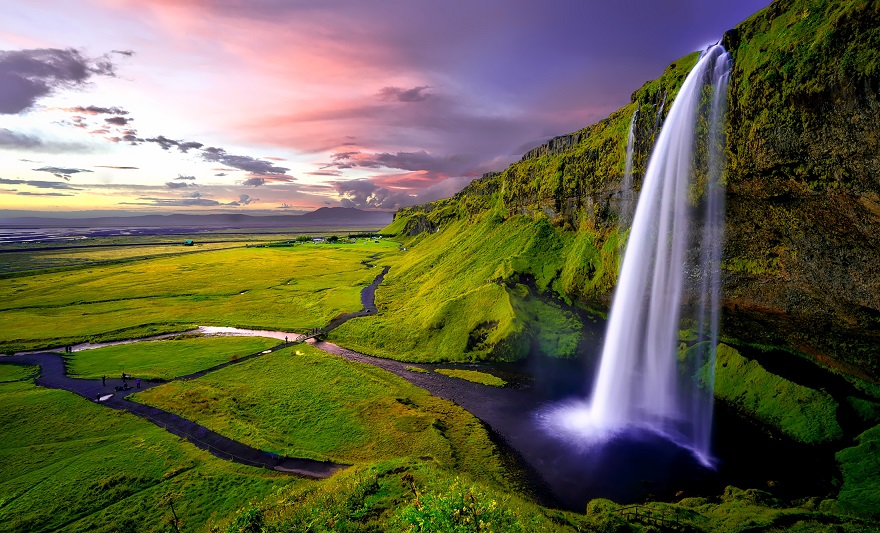
You probably know the surface of our planet quite well. It contains mountains, valleys, forests, deserts, plains, and more. 70% of the surface is covered by oceans, which is why Earth is sometimes called the blue planet. Although humans have been traveling the Earth for thousands of years, there are still parts to discover.
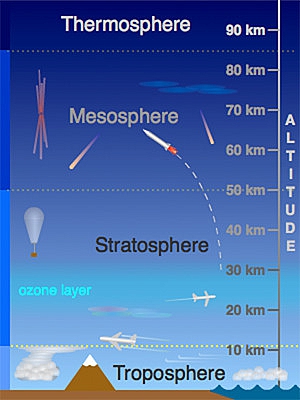
Earth has an atmosphere of mostly nitrogen and oxygen. It protects us from most meteoroids, keeps the Earth warm, and provides us with air to breathe. Without the atmosphere, we wouldn’t have life on Earth.
The atmosphere can be divided into a few layers. The first is the troposphere, going up to around 15 km high. The troposphere contains all the weather, clouds, and 80% of all the air in the atmosphere. Above the troposphere is the stratosphere, which goes up to 50 km. Here the air is much thinner and colder, and commercial airplanes and weather balloons fly at this altitude. The stratosphere contains the ozone layer, a layer of ozone that blocks most of the ultraviolet light from the sun. the next layer is the mesosphere, which goes up to 85 km. here, most meteors burn up. Because it is too high for aircraft or balloons, and too low for spaceships, the mesosphere is the least understood part and contains many interesting phenomena such as noctilucent clouds, red sprites, blue jets, a layer of sodium and more.
Above that are the thermosphere and the exosphere. Although the atmosphere technically extends for thousands of km, above 100 km is considered outer space. Above that, the air is so thin its effects are negligible. Auroras are usually 100 to 150 km up, and above are the orbits of satellites.
Caused by the moving core, our planet has a magnetic field that surrounds Earth and protects against solar wind. Without it, the solar wind would slowly blow away our atmosphere.
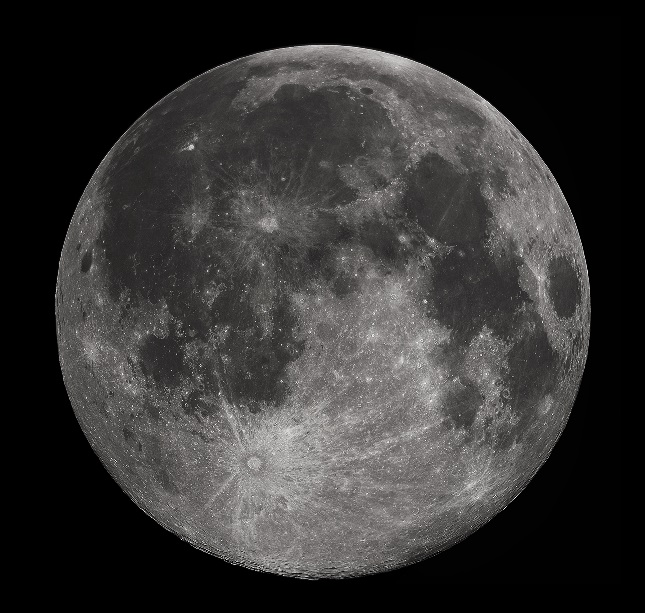
The moon is a familiar sight in the night sky. It is the second brightest object after the sun. with a radius of 1700 km, it is one of the biggest moons in our solar system, especially when compared to the size of the Earth. The moon orbits the Earth every 27 days at a distance of 380000 km, far enough to fit all 8 planets in between. Its gravitational pull causes the tides on Earth.
Because of the temperature, size, composition, atmosphere, and many other factors, the Earth is a suitable place for life, and the only place in the universe we know life exists. Life first formed on Earth 3.8 billion years ago as primitive bacteria, and slowly evolved into all the animals today.