
A star system a large area containing a star, and all the objects that orbit it, such as planets, moons, asteroids, comets, and more. It can also contain many stars, although most star systems only have 1.
We live in a star system called the solar system. It contains the Earth, the Sun, the moon, and more. In total, it contains 1 star, 8 planets, and countless other celestial bodies
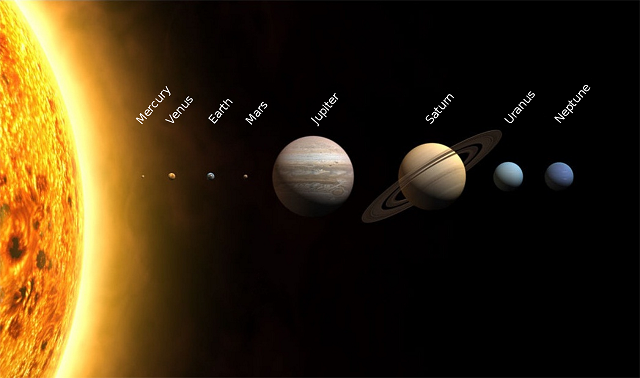
The solar system can be divided into many parts. As said earlier, everything in the solar system orbits the sun. In between the planets and other objects are empty space with no air. Although there are thousands of big rocks floating around, the solar system is so large that over 99.999% of it is empty. If the sun were the size of a basketball, then the earth would orbit 26 meters away, and the furthest planet would be almost 800 meters further.
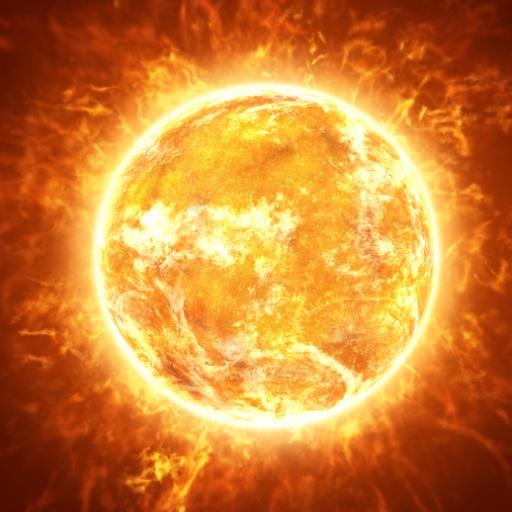
Our solar system only contains 1 star: the sun. Everything else in the solar system revolves around it, and without its gravity, they would all float away.
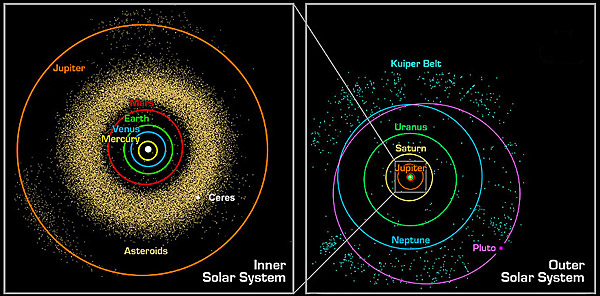
The inner solar system is the part closest to the sun. It contains the planets Mercury, Venus, Earth, and Mars, as well as the asteroid belt. The first 4 planets are relatively small and made of rock instead of gas.
At the edge of the inner solar system is a region where there are lots of asteroids, called the asteroid belt.
The outer part of the solar system is called the outer solar system (obviously). It consists of the 4 outer planets Jupiter, Saturn, Uranus, and Neptune. These are way bigger than the first 4 and made of gas.
The solar system extends much farther than the orbits of the eight planets. The solar system also includes the Kuiper Belt that lies past Neptune. This is a sparsely occupied ring of icy bodies, almost all smaller than the most popular Kuiper Belt Object, dwarf planet Pluto. And beyond the edge of the Kuiper belt is the Oort Cloud. This giant spherical shell surrounds our solar system and extends for trillions of kilometers.
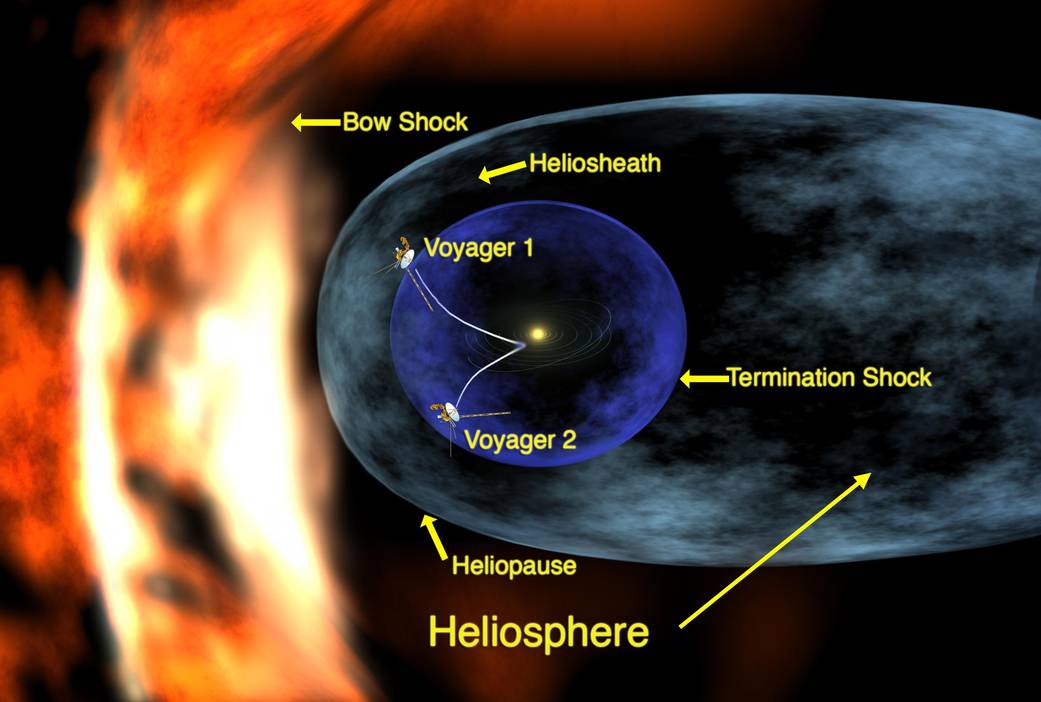
The solar system also has a heliosphere, which does not extend as far. It is a bubble that is created by the solar wind pushing against interstellar gas. The solar winds are strong, but after travelling around 100 AU, they lose energy and suddenly slow down. This is called the termination shock. However, they still push on for some distance creating an area of slow moving solar wind called the helioshealth. The heliosphere ends at the heliopause, when then solar wind is finally pushed back by the interstellar wind.
As the solar system moves through space, it creates ripples in the interstellar gas, just like a duck creates ripples when travelling through a pond. This forms a bow shock in front.
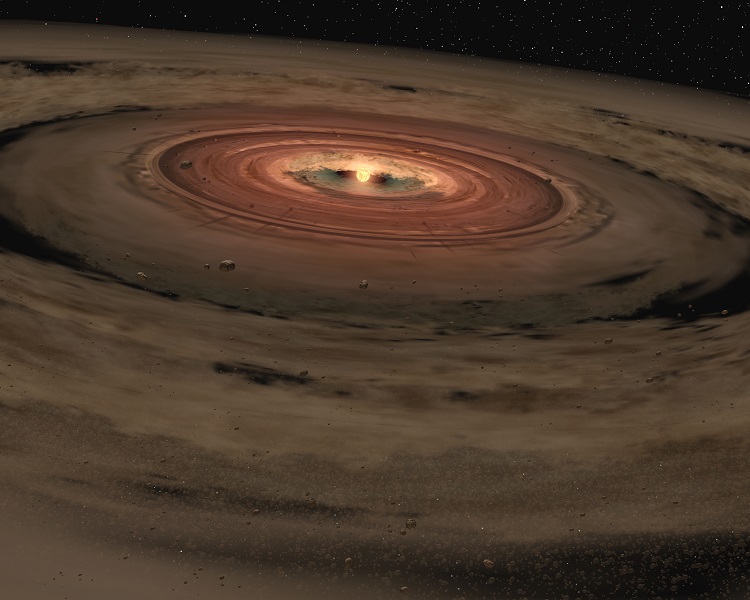
Our solar system formed about 4.5 billion years ago from a dense cloud of interstellar gas and dust. The cloud collapsed, probably due to the shockwave of a nearby exploding star, called a supernova. When this dust cloud collapsed, it formed a spinning, swirling disk of the material called a solar nebula.
At the center, gravity pulled more and more material in. Eventually, the pressure in the core was so great that hydrogen atoms began to combine and form helium, releasing a tremendous amount of energy. The sun was formed from that center mass and took up over 99 percent of the total gas and clouds
Bits of matter farther out in the disk was also clumping together. These clumps smashed into one another, forming larger and larger objects. Some of them grew big enough for their gravity to shape them into spheres and became planets, dwarf planets and large moons. In other cases, they stayed as small chunks. The asteroid belt is made of bits and pieces of the early solar system that could never quite come together into a planet. Other smaller leftover pieces became asteroids, comets, meteoroids, and small, irregular moons.